Caddie Smells Like Trees - 2024
I feel like a steward of a divine circumstance. I just happened to have a camera.
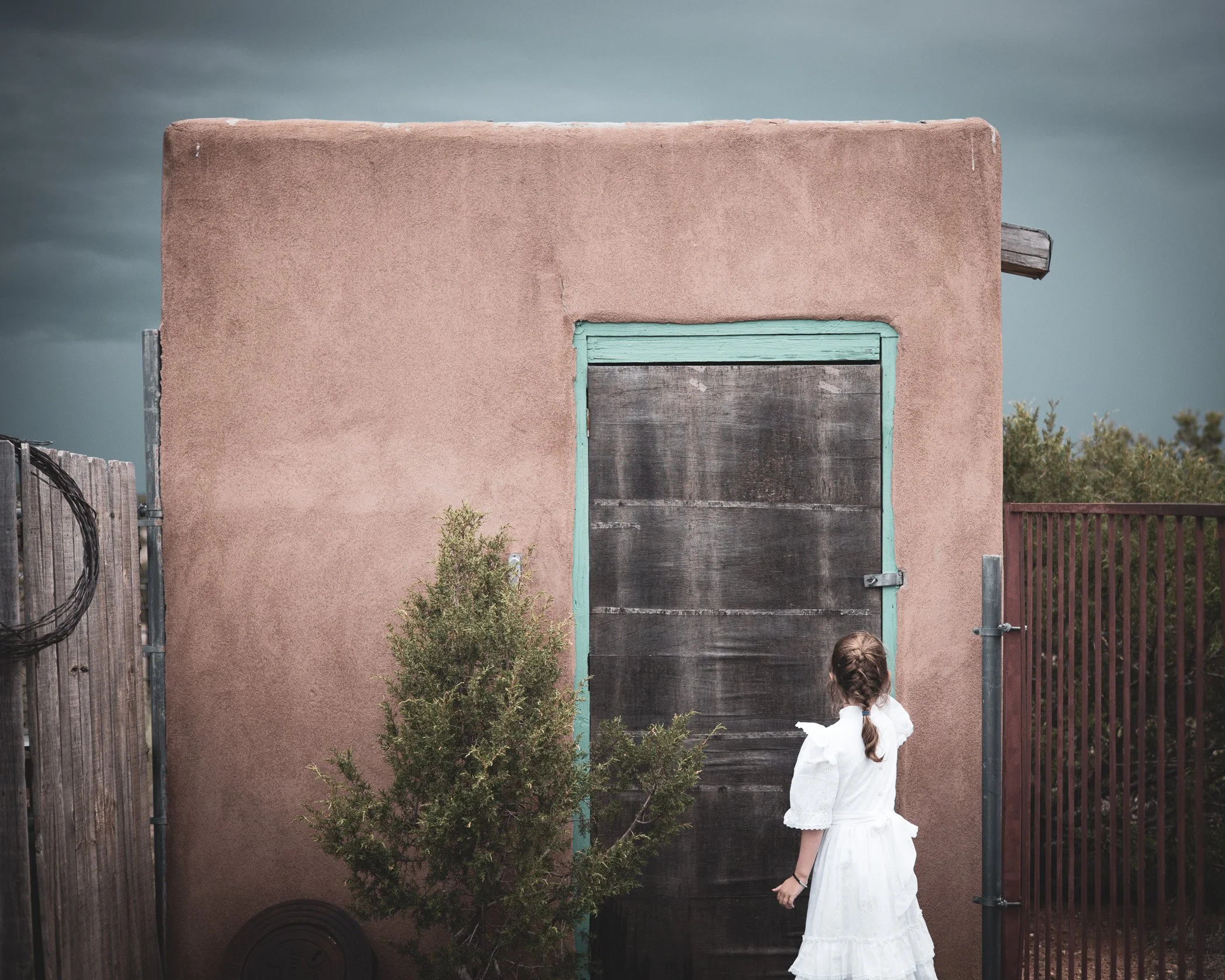
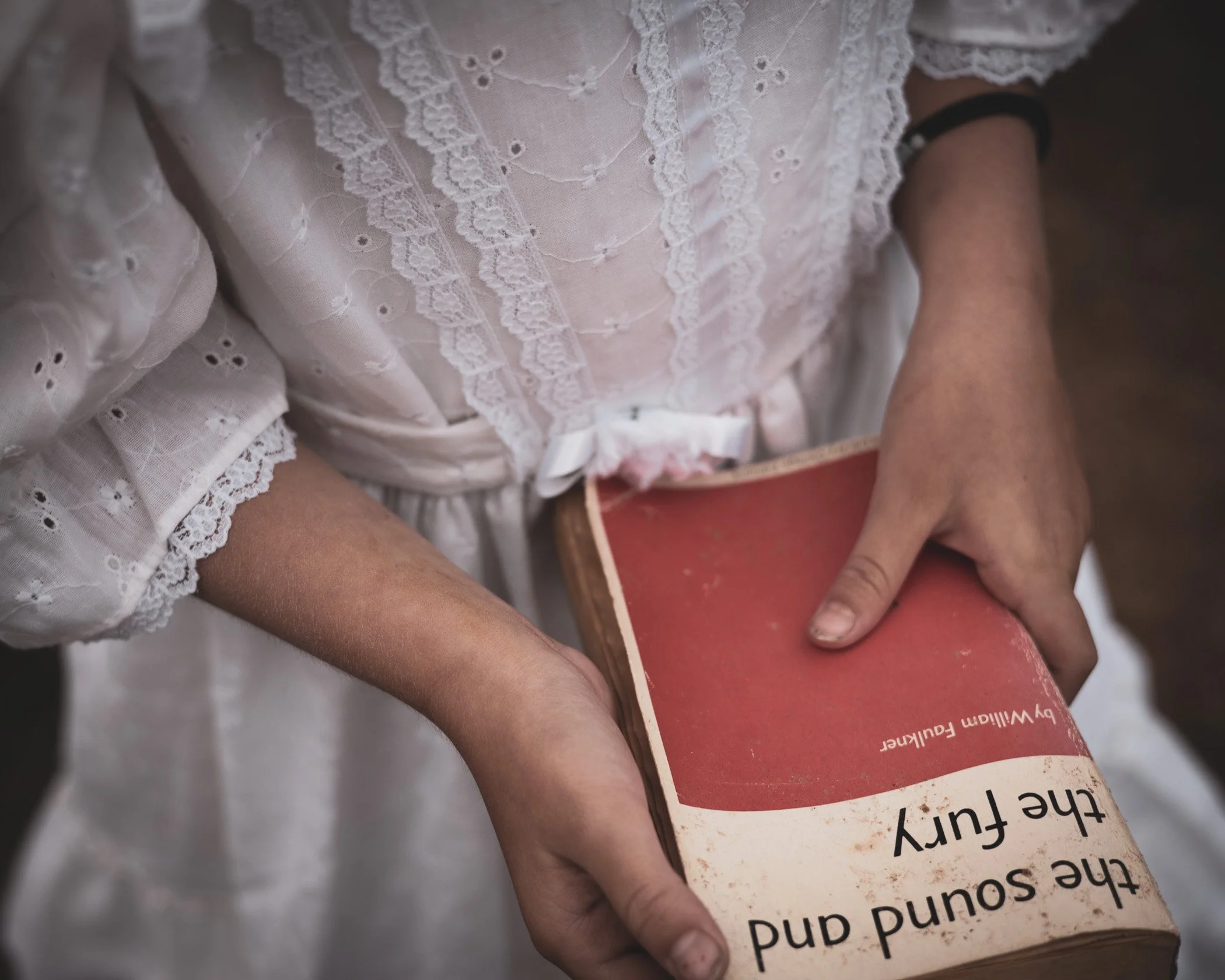
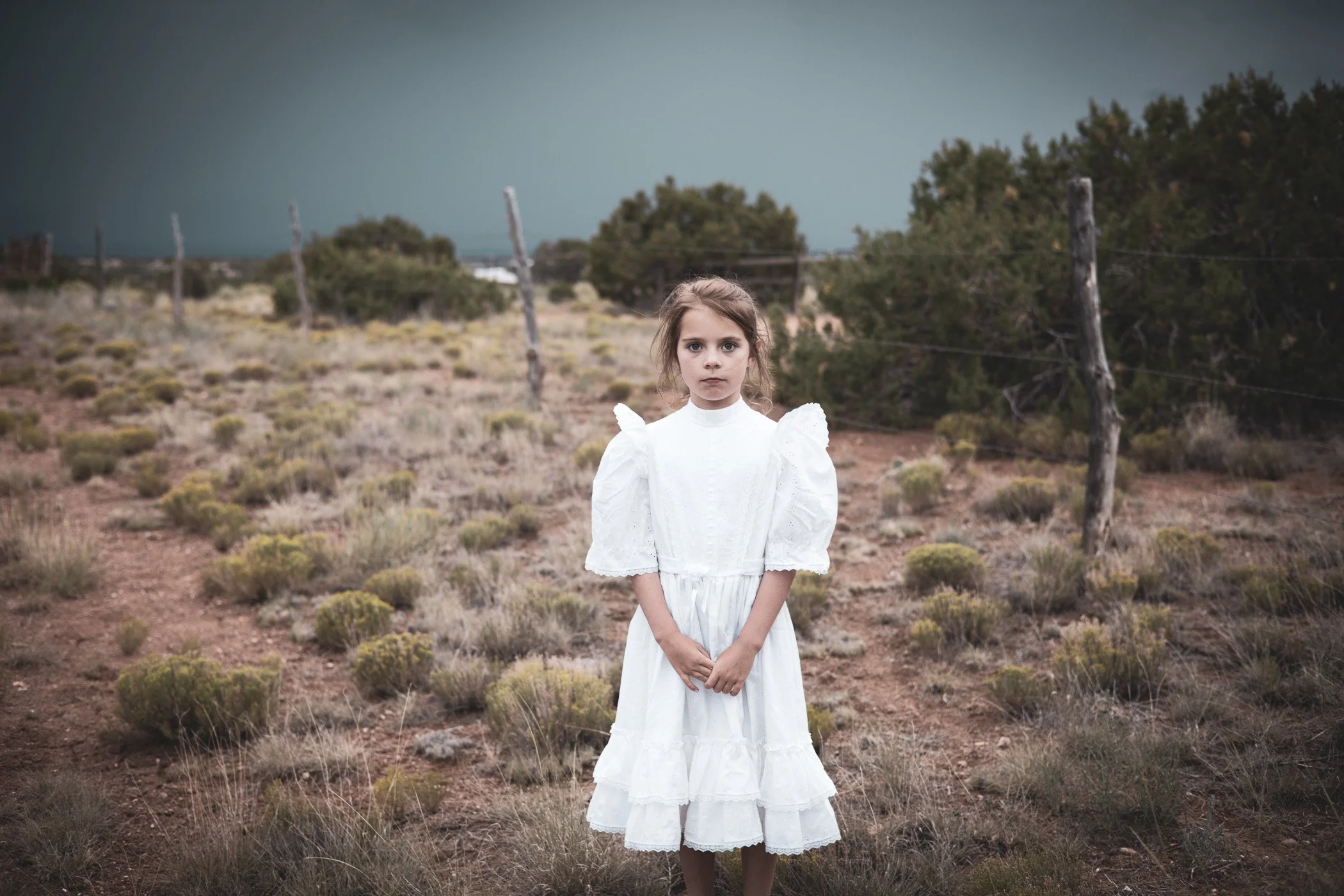
Each year, my daughter and I take one week to travel together and make art. We are both artists — it is a shared language between us, older than words. In the summer of 2024 we went on a painting residency in Lamy, New Mexico. Before we left Atlanta I bought a white dress. I have been building a ghost series for twenty years, and I believed the high desert might be the place to push it forward.
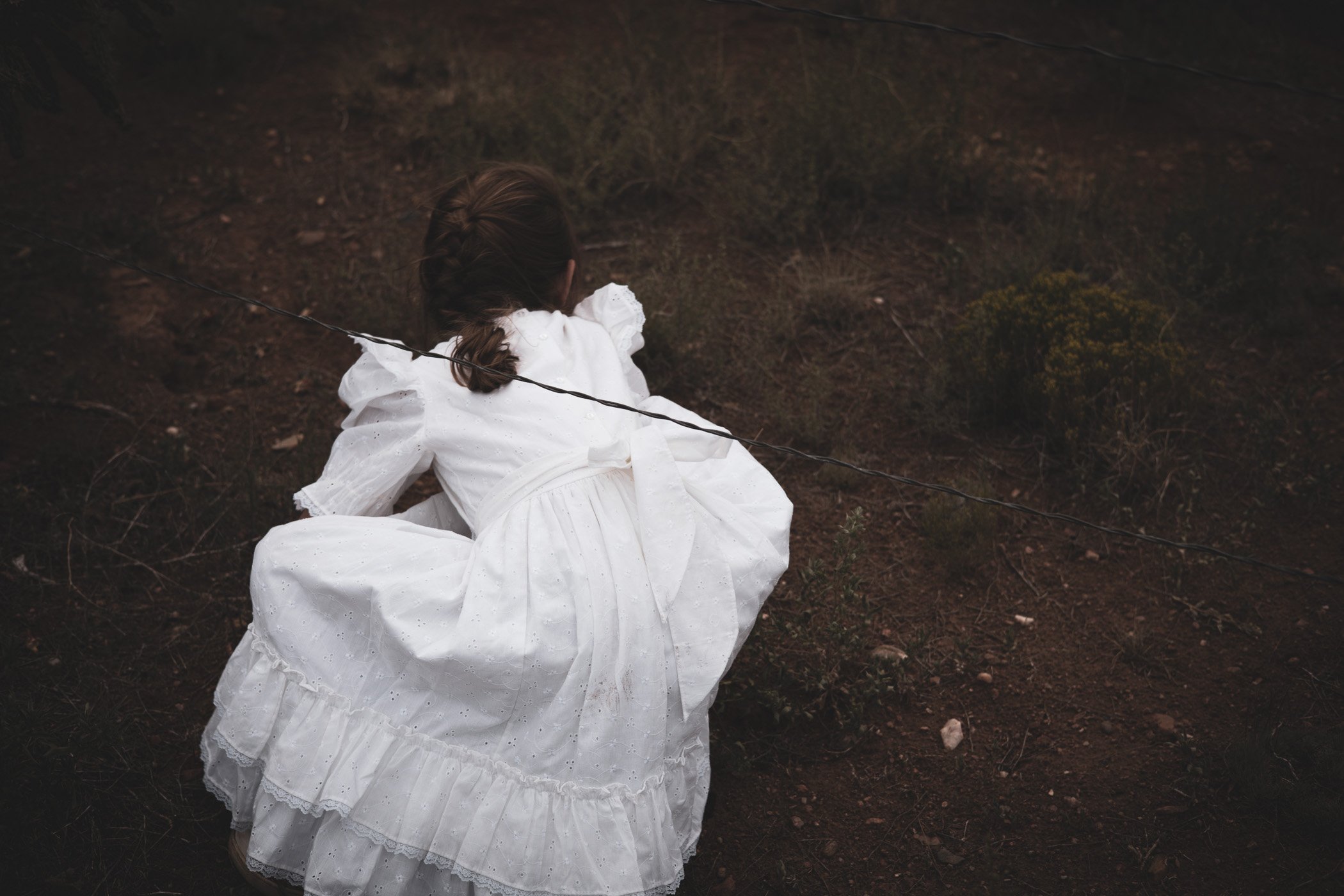
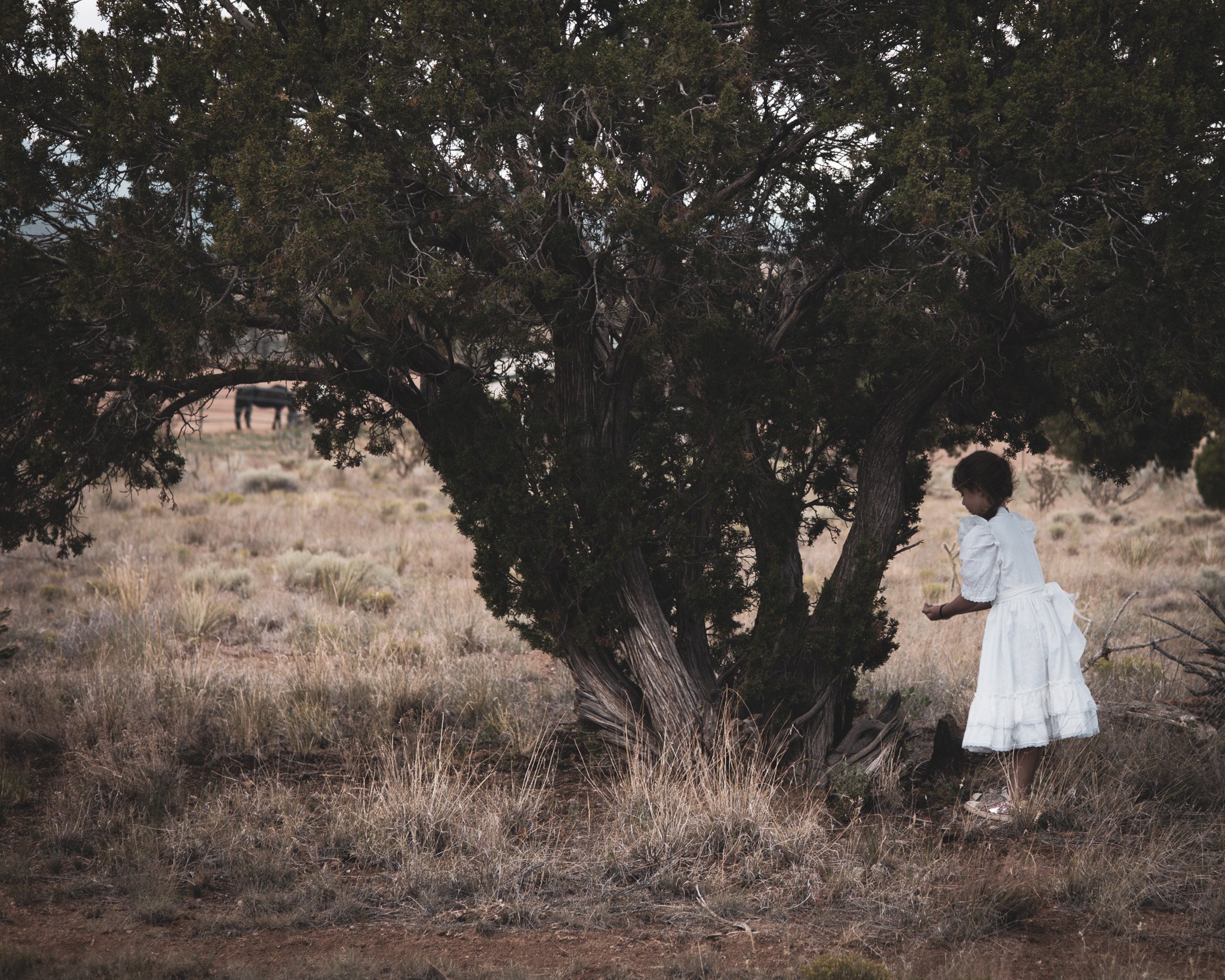
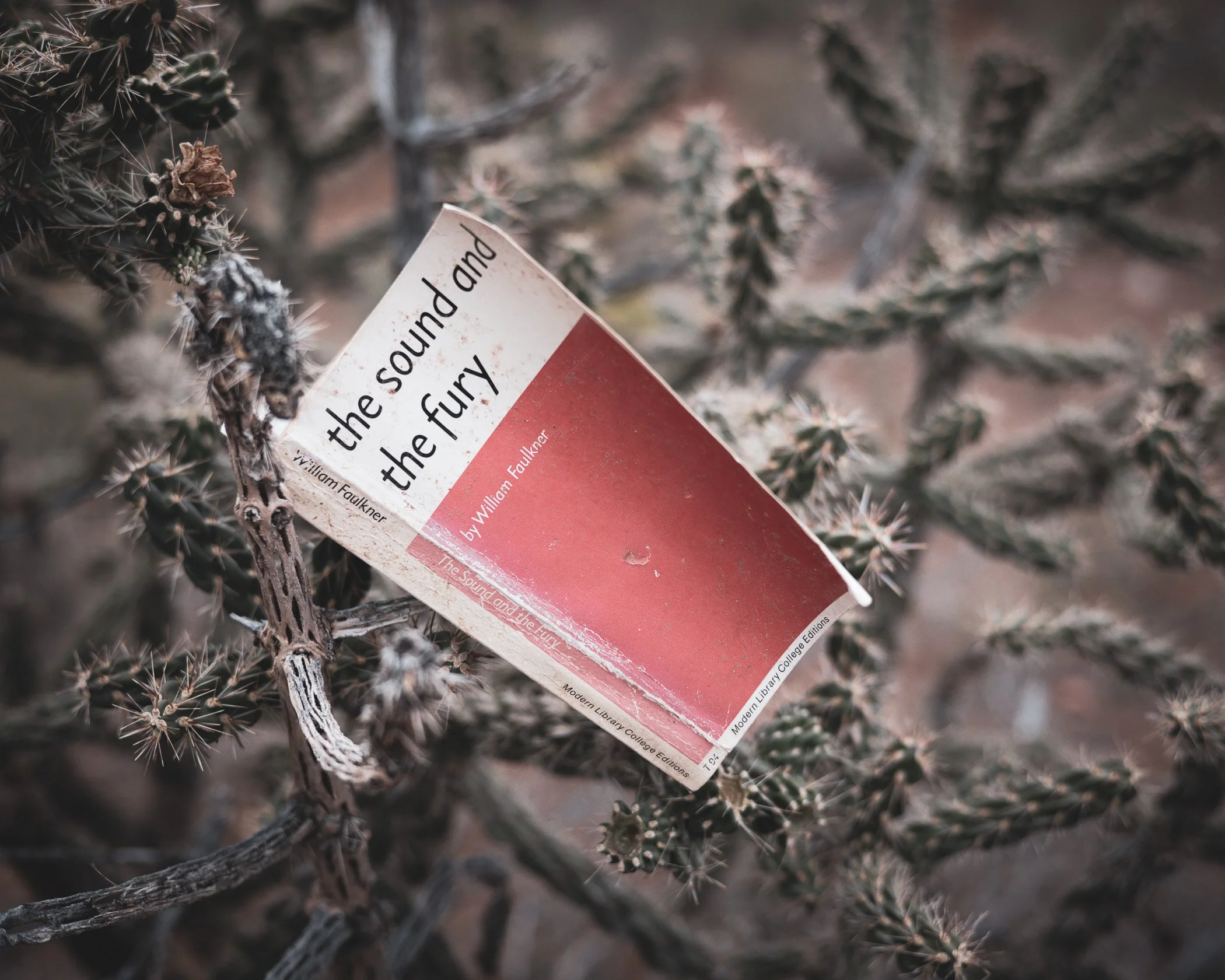
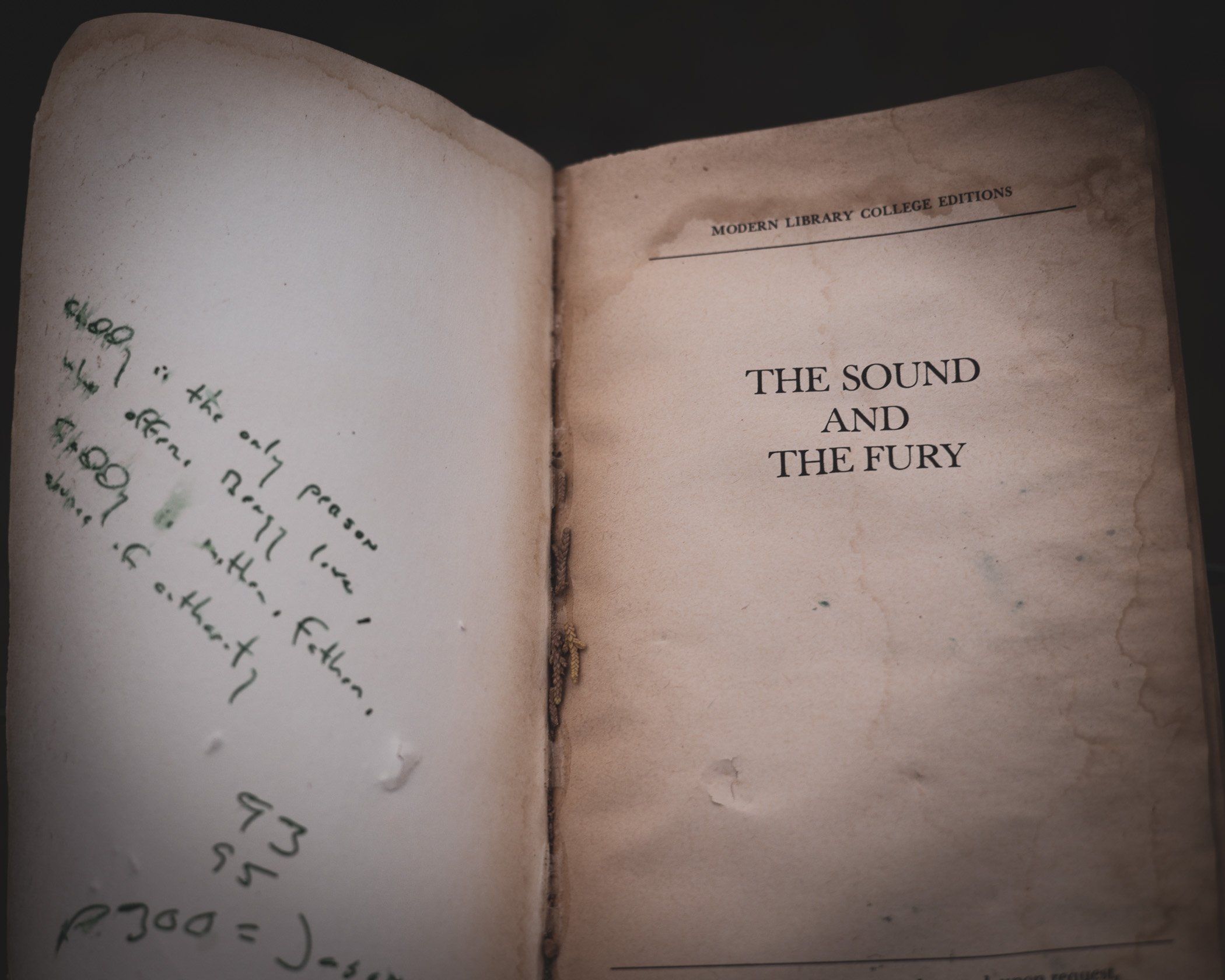
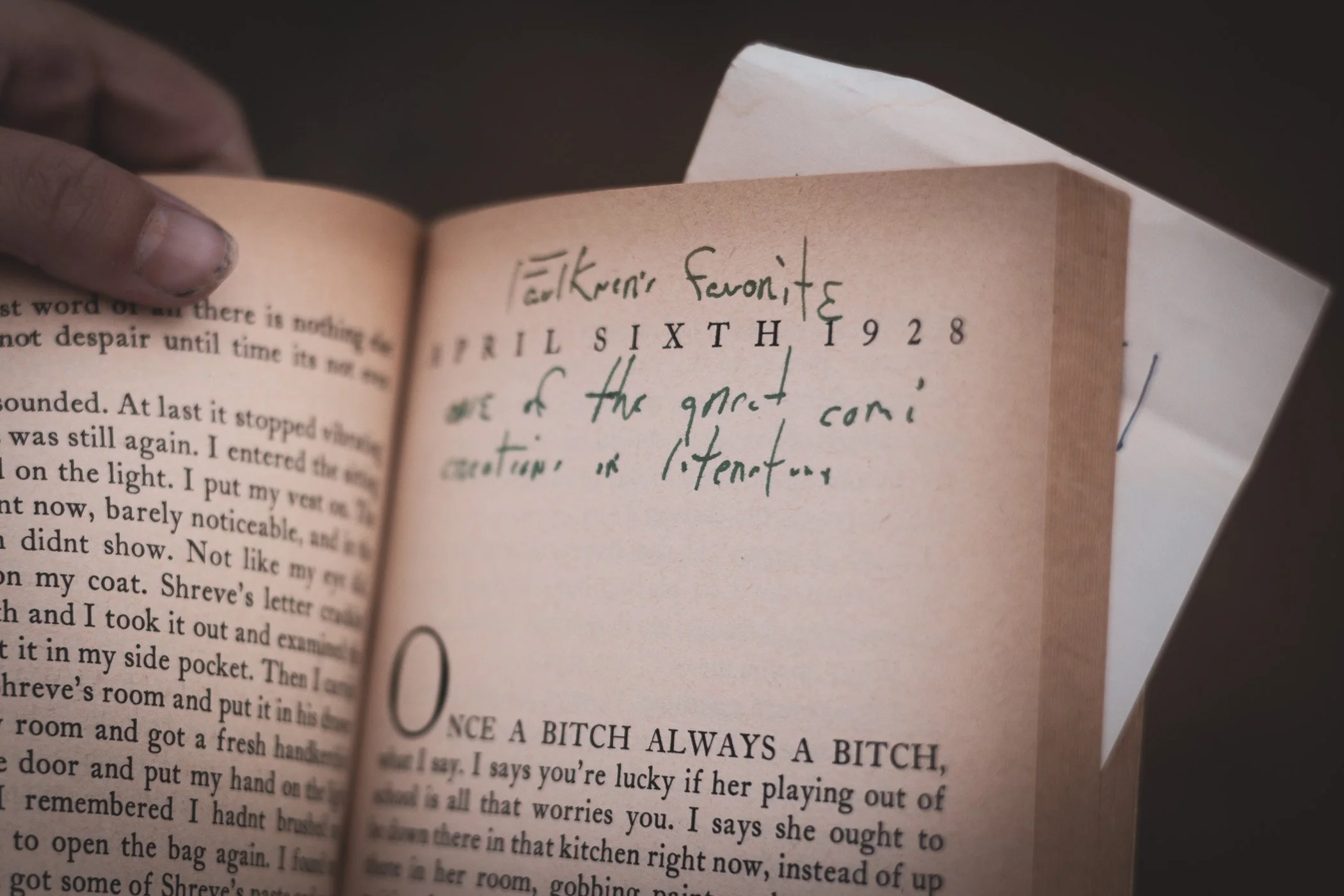
Out on the land, the work took on the feeling of a threshold — a Southern child moving through a landscape that did not belong to her, as if stepping through a quiet portal. I began photographing her without direction. She ran, twirled, dug beneath trees. About an hour in, we found an abandoned copy of The Sound and the Fury half-buried in the desert — filled with handwritten annotations in green ink, including the line: Caddy is the only person who really loves. I sent my daughter under the barbed wire to retrieve it.
The book felt heavy emotionally, as if it carried something forward through time — something unresolved. After photographing it together we contemplated bringing it back to Atlanta, but almost immediately decided it belonged to the land. We returned it to the earth.
It wasn't until I got home and began editing that I fully remembered what the novel was about. I'd read it twenty-five years ago and forgotten. In returning to it, I discovered Caddy — idealistic, headstrong, seen only through the memories of others, never given her own voice. I recognized her immediately. Not only in the text, but in the act of reading itself — in the moment a young girl encounters a version of the world she does not yet understand and begins to see herself inside it.
This series tells two parallel stories on different timelines. In one, a spirit moves through the Southwestern desert and unearths a literary time capsule from the postwar American South. In the other, my daughter encounters a book containing words and histories she did not yet know existed. Both are stories of innocence interrupted. Both are about what cannot be unknown once it has been seen.
I initially hesitated to share this work. There was an instinct to protect my daughter, to leave the book and its contents in the desert where we found it. But the work would not stay quiet.
I am a Southerner. The language embedded in those pages is part of the history of my land and my people. It is a history we live with — one felt in the landscape itself. Once it is seen, it cannot be unseen. It becomes something we carry, something we move through, something that changes how we understand both the past and ourselves.
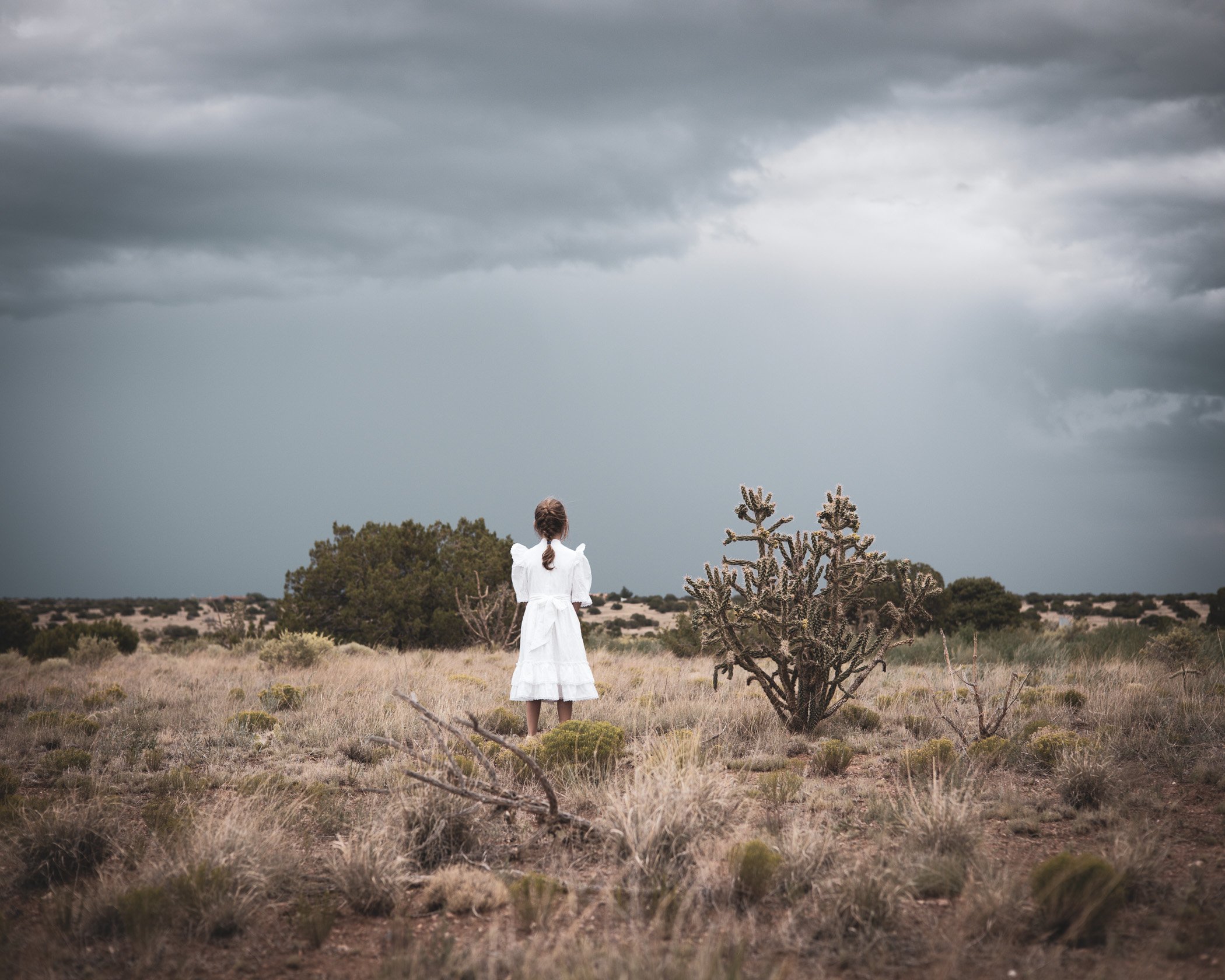
She closed the book. She returned it to the earth. She faced the world.
The land remembers. The story continues.